
Choosing the Right LED Display for Your Business: What to Look For
A business should match LED choice to environment, viewing distance, and message goals. Assess indoor versus outdoor exposure, required pixel pitch and resolution for clarity, and peak brightness plus contrast for visibility in ambient light. Specify durable enclosures, mounting LED screen display, and cooling for longevity, and plan for power redundancy and service access. Factor connectivity, content tools, and lifecycle costs to guarantee operational agility. Further guidance explains tradeoffs and practical selection steps.

Assessing Indoor vs. Outdoor Requirements
When deciding between indoor and outdoor LED displays, a business must prioritize environment-driven specifications—brightness, weather resistance, viewing distance, and mounting constraints—to guarantee the screen performs reliably and delivers the intended impact. The assessor evaluates ambient lighting to set brightness and contrast needs: indoor spaces with controlled light permit lower luminance, while outdoor sites demand high-nit panels to remain legible in sun. Weather exposure dictates enclosure ratings and corrosion resistance; vibration and access influence mounting strategy. Ventilation requirements and heat management define cabinet design and serviceability, preserving lifespan without restricting placement freedom. Cost-benefit analysis should weigh operational constraints against communication goals, enabling a choice that maximizes visibility, durability, and strategic flexibility.
Understanding Pixel Pitch and Resolution
After settling environment and mounting needs, attention shifts to pixel pitch and resolution because they determine image clarity and effective viewing distance. The decision-maker evaluates pixel density against intended viewing distance: tighter pitch for close engagement, wider for distant impact. Resolution must match content goals to avoid wasted cost or blurred messaging. Effective color blending relies on consistent module alignment and signal integrity, not just raw resolution; designers favor panels that render gradients and text cleanly at expected ranges. Maintenance plans should include straightforward calibration techniques to preserve uniformity and extend creative freedom over content placement. Choosing a display consequently balances technical specs with operational flexibility, ensuring the investment supports clear communication without constraining future use.
Evaluating Brightness, Contrast, and Color Accuracy
How bright should the screen be to cut through ambient light without washing out content? The evaluator recommends selecting luminance levels matched to location — higher nits for sunlit façades, moderate for shaded interiors — while preserving contrast to maintain deep blacks and legible highlights. Contrast ratio and HDR capability determine perceived depth; accurate gamma mapping prevents crushed shadows. Color calibration and wide color gamut guarantee brand hues remain true; lookup-table adjustments and factory profiling support consistency. Decision-makers balance peak brightness against energy consumption and lifetime trade-offs, choosing adaptive dimming to conserve power. Prioritize displays offering straightforward calibration tools, measurable specifications, and vendor support so operators retain control over visibility, fidelity, and operating costs while maintaining visual freedom.
Installation, Mounting, and Environmental Durability
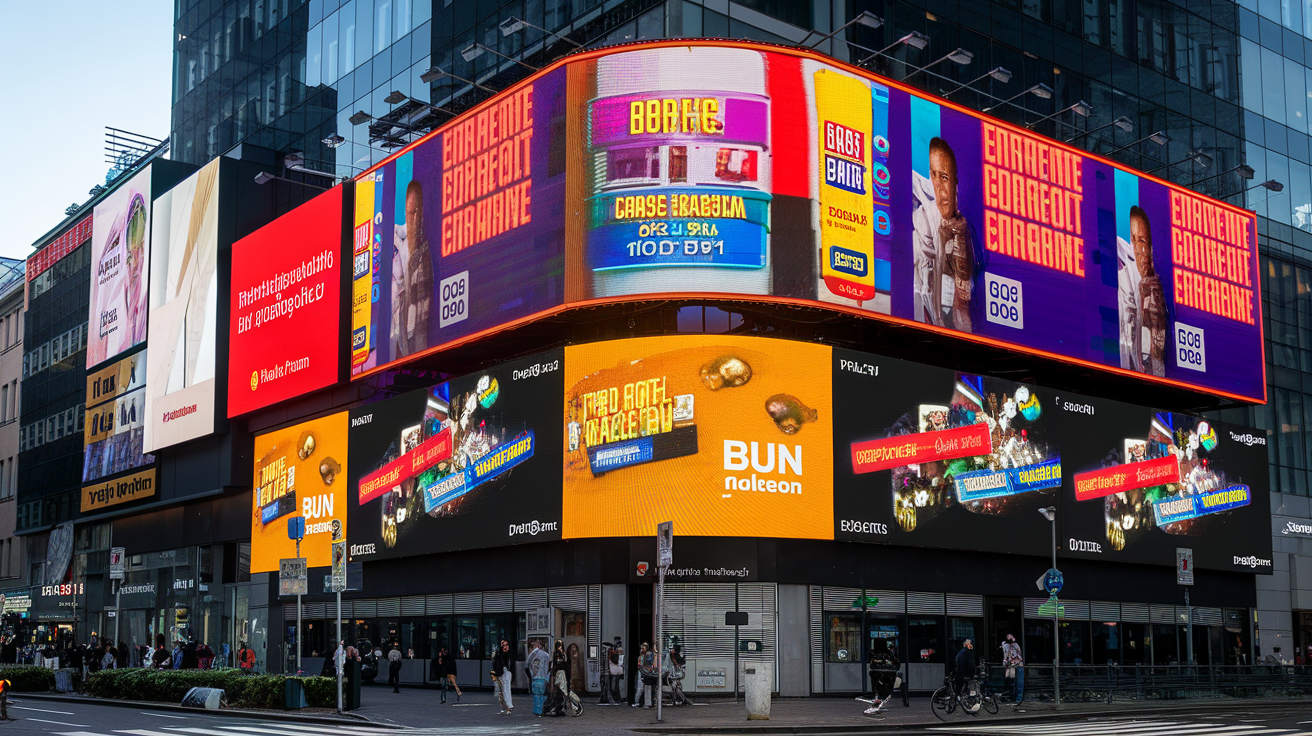
In selecting an LED display, site-specific installation, mounting, and environmental durability considerations determine long-term performance and total cost of ownership. Decision-makers should prioritize robust mounting systems that allow secure, level placement and easy access for maintenance, enabling autonomy over on-site adjustments. Weatherproof sealing and appropriate ingress protection ratings protect investments against moisture, dust, and temperature extremes, reducing downtime and repair costs. Structural assessments must align with wind load and seismic requirements to safeguard both display and property. Incorporating power redundancy and surge protection preserves uptime and supports uninterrupted operation in critical locations. Modular designs simplify upgrades and replacements, preserving freedom to scale or relocate. Choosing durable materials and certified installers minimizes risk and preserves display value over its lifecycle.
Content Management, Connectivity, and Total Cost of Ownership
For long-term effectiveness and budget control, content management, connectivity, and total cost of ownership must be evaluated as an integrated system: reliable software and intuitive scheduling tools determine message agility; secure, scalable network options enable real‑time updates and remote diagnostics; and predictable operating costs—power consumption, maintenance, licensing, and refresh cycles—drive lifecycle budgeting. The decision-maker prioritizes platforms offering straightforward content scheduling, rights management, and templates that reduce dependence on specialized staff. Connectivity choices—wired, wireless, cellular, or hybrid—should align with redundancy needs and freedom from vendor lock-in. Transparent reporting on energy use and service requirements quantifies true ownership costs. Accessible remote diagnostics and modular hardware simplify repairs and extend useful life, converting upfront investment into sustained operational flexibility and lower long-term expense.
Frequently Asked Questions
How Do LED Displays Affect Customer Foot Traffic and Sales?
LED displays increase visibility, drawing more foot traffic and enabling dynamic promotions that trigger impulse purchases. They strategically boost sales by enhancing brand presence, freeing businesses to experiment with timely offers and capture spontaneous customer decisions.
What Maintenance Routines Should Staff Perform Daily or Weekly?
Staff should perform daily cleaning of screens and vents, inspect connections, and reboot displays; weekly tasks include software updates, firmware checks, brightness calibration, and thorough diagnostics. This disciplined routine preserves autonomy and maximizes operational freedom.
Are There Financing or Leasing Options for LED Displays?
Yes. The company offers flexible payment plans and operating leases enabling businesses to preserve capital, scale display capabilities, and maintain operational freedom, while tailored terms, tax benefits, and upgrade options align with strategic growth and cash-flow control.
How Does Warranty Coverage Handle Pixel Failure or Color Shift?
Warranty typically covers pixel failure and major color shift within defined thresholds; warranty limitations often exclude gradual degradation or environmental damage. The buyer should demand clear color calibration clauses and repair, replacement, or pro-rated options for freedom.
Can LED Displays Integrate With Existing Store Lighting Systems?
Yes. It can: the display supports smart synchronization with existing fixtures, adapts to common lighting protocols (DMX, DALI, Zigbee), enables strategic, autonomous scenes and preserves operator freedom through modular, interoperable control.
Conclusion
Choosing the right LED display requires a strategic balance of technical performance and operational practicality. Decision-makers should match indoor or outdoor specifications to use-case, prioritize pixel pitch and resolution for viewing distance, and demand sufficient brightness, contrast, and color fidelity. Durable installation and mounting solutions, reliable connectivity, and intuitive content management reduce risk. Evaluating total cost of ownership guarantees long-term value. When selected against these criteria, an LED display becomes a measurable business asset.